
Temple City Directory Holdings
Temple city directory research starts with a careful distinction between a verified volume and a lead that still needs a title-page check. The Texas State Library and Archives Commission says its directory holdings can include names, addresses, telephone listings, spouses, occupations, and owned or rented indicators. Its print and microform volumes are used in the Austin Reference Reading Room, where staff do not search or transcribe them by phone or email. The commission directs researchers to its catalog, WorldCat, local libraries, the UNT Portal to Texas History, and UT Austin collections.
| Temple collection lead | Years or date | Where held | How to use it |
|---|---|---|---|
| Temple city-directory bibliography | 1913 | Official National Register bibliography | Verified bibliographic mention; locate the volume before relying on an entry. |
| Temple city-directory bibliography | 1915-16 | Official National Register bibliography | Verified bibliographic mention; compare the volume title page and scope. |
| Temple city-directory bibliography | 1921-22 and 1924 | Official National Register bibliography | Verified bibliographic mentions; search TSLAC, UNT, or WorldCat for access. |
| Temple holding leads | 1909, 1911, 1917, 1957, 1959, 1960 | Catalog and holding leads | Candidate years, not a confirmed uninterrupted run or complete edition set. |
The historical sweep did not verify every Temple volume or a continuous publisher-by-publisher run. It also did not locate an official Temple reverse or criss-cross directory series. That gap matters. A holding list can be a useful starting point, but the directory itself must identify the city, year, publisher, and edition before it becomes evidence for a household or address.
Temple City Directory Year Checks
Use the year printed inside a Temple city directory, not just a catalog label. Annual books often had a cutoff date, so an address may be current for the compilation period but not for the entire calendar year. Start by finding the title page, then note the publisher, edition, geographic scope, and any introductory explanation of abbreviations. Search the surname alphabetically, and search the street section only when the volume actually provides one.
For a missing year, work outward rather than guessing. Check the years immediately before and after, then pair the gap with a newspaper item, deed, tax parcel, Sanborn sheet, or city record. Each source answers a different question. A directory supplies an annual printed association; a deed records a legal transfer; a map supplies built-place context. Keeping those roles separate prevents a plausible history from turning into an unsupported claim.
Note: A candidate holding should remain labeled as a lead until the Temple volume and its title page are independently confirmed.
Reading a Temple City Directory Entry
A Temple city directory entry is compact, so read every field before drawing a conclusion. The TSLAC guide says city directories commonly list a name, street address, telephone number, spouse, occupation, and an owned or rented indicator. Any one field can be incomplete or stale. A name may be abbreviated, a spouse may be shown only through a notation, and a work listing may identify an employer rather than a home.
| Name | The printed name or initials, which should be searched with spelling variants in other Temple sources. |
|---|---|
| Street address | An annual address association, not proof of present occupancy or a modern postal label. |
| Spouse or household cue | A relationship hint that can help separate people with the same name. |
| Occupation or employer | Historical context that may lead to a newspaper, business, or institutional search. |
| Owned or rented indicator | A directory convention whose meaning must be confirmed from that volume's own key. |
- Criss-cross directory
- A street-ordered directory section, when a particular volume includes one, used to find printed address associations by street rather than by surname.
- Householder index
- An index arranged around the household or address context instead of a simple name list; its exact contents depend on the edition.
- Abbreviation key
- The publisher's explanation of shortened words and symbols, usually near the front matter; capture it with the entry before interpreting a mark.
Do not assume a criss-cross section exists just because another city used one. No official Temple reverse-directory run was located in the research. When a later street question needs current parcel or address records, use the separate Temple street records path instead of stretching a historical volume beyond its date.
Temple City Directory Newspaper Clues
The digitized Temple Telegram gives a second dated source alongside a Temple city directory. The collection describes the Telegram as founded in 1907 after earlier Temple papers, with 4,628 items, one title, and three decades represented when inspected. Search an exact name with a date, street, business, or institution. Save the issue date, page, title, and item identifier because newspapers can repeat names and can also contain errors.
Start with the UNT Temple Telegram collection when a directory entry needs a dated local-news check.
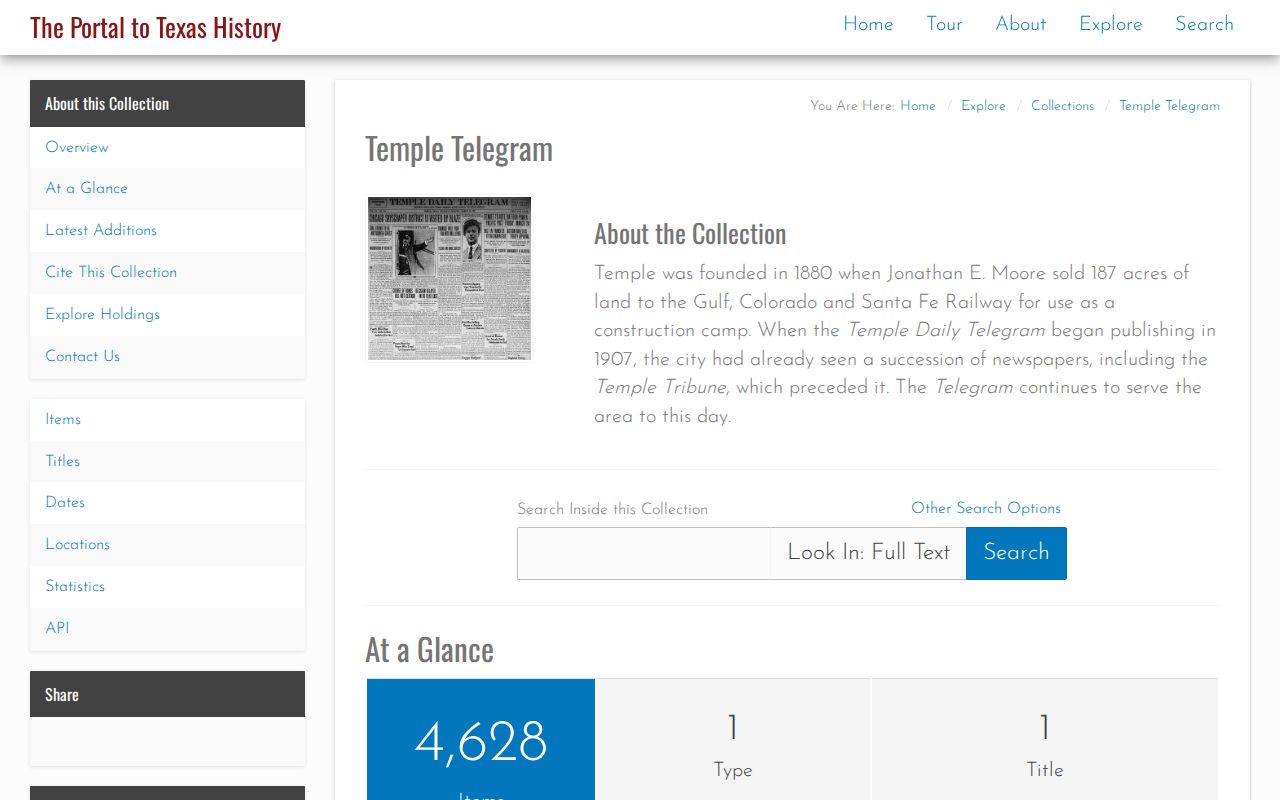
The collection view supports a deliberate search for the publication record behind a Temple address or name, rather than treating a newspaper mention as a complete identity match.
Temple Telegram and Temple Tribune are useful historical title variations. For the earliest city era, railroad, depot, and early-business terms can make a directory search more precise. Temple formed with the Santa Fe in 1881, gained the MKT in 1882, and incorporated that same year. Those local terms are search aids, not proof that a particular person was connected to an institution.
Temple City Directory Library Trail
Temple's library history is a practical finding aid for city-directory work. The historical marker records a library formed in 1900, a Carnegie building dedicated in 1904, a fire in 1918, reopening in a rented room in 1924, a move to the municipal building in 1929, and a move to the old post office in 1963. Catalogs, clippings, photographs, and local references may use those older institutional names or addresses instead of a modern library label.
Use the Texas Historical Commission library marker to date those changing references before treating two addresses as the same place.
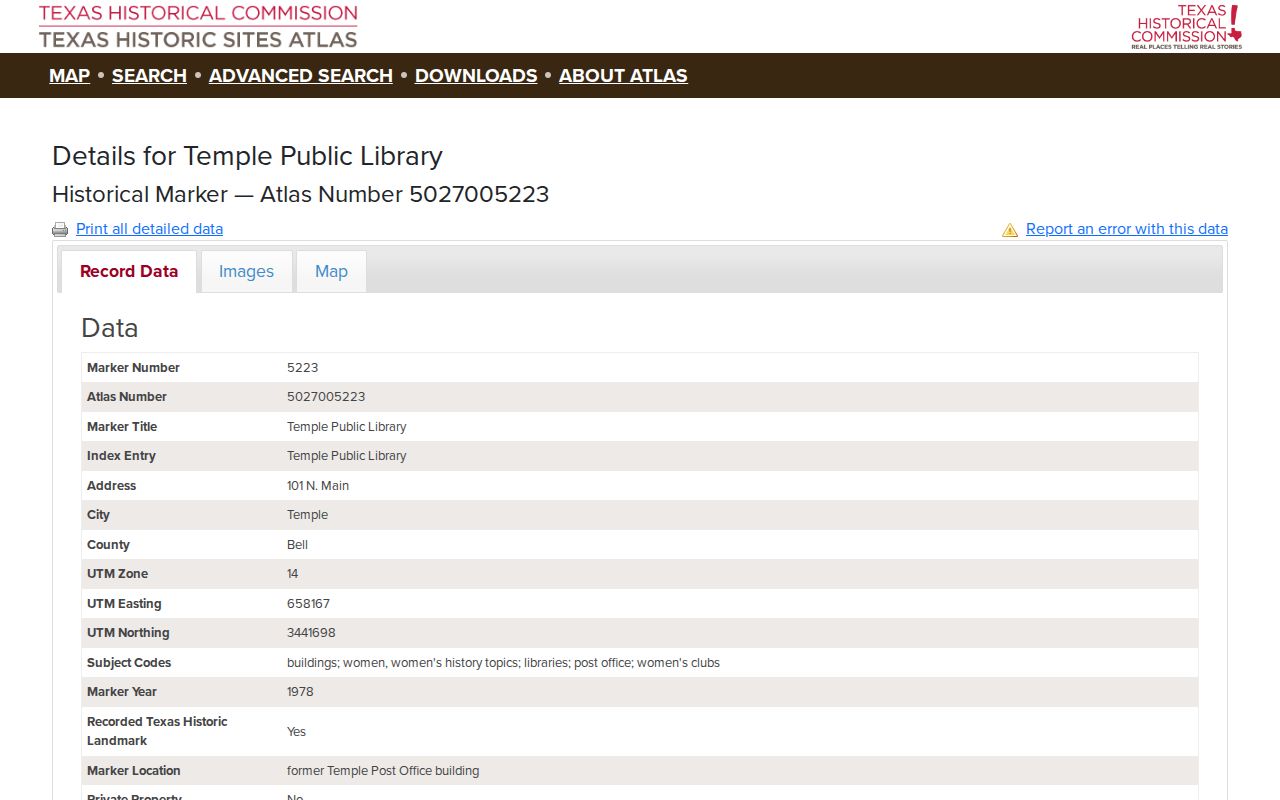
The library history explains why an older Temple directory search may need terms such as municipal building or old post office, each paired with the appropriate period.
Temple Public Library is also listed as a Census Depository Library. It is a useful local entry point for catalog guidance, Census reference, historical maps, and state or federal collection referrals. Its changing historical location does not prove that a specific directory remains on-site, so confirm a volume with the catalog or a holding institution before making a trip.
Temple Directory Leads in Bell History
Bell County Genealogy & History adds companion sources when a Temple city directory leaves an unexplained gap. Its projects include cemetery inventories, obituary and vital-record leads, a census project, original-land-owner material, Bell County Home and Poor Farm records from 1913 through 1969, and Nannie's Scrapbooks for Bell happenings around 1880 through 1930. These are historical leads, not the legal custodian for a current record.
The Bell County Genealogy & History archives can help locate a newspaper, cemetery, or local-history clue that should then be checked against a source image or the responsible government office.
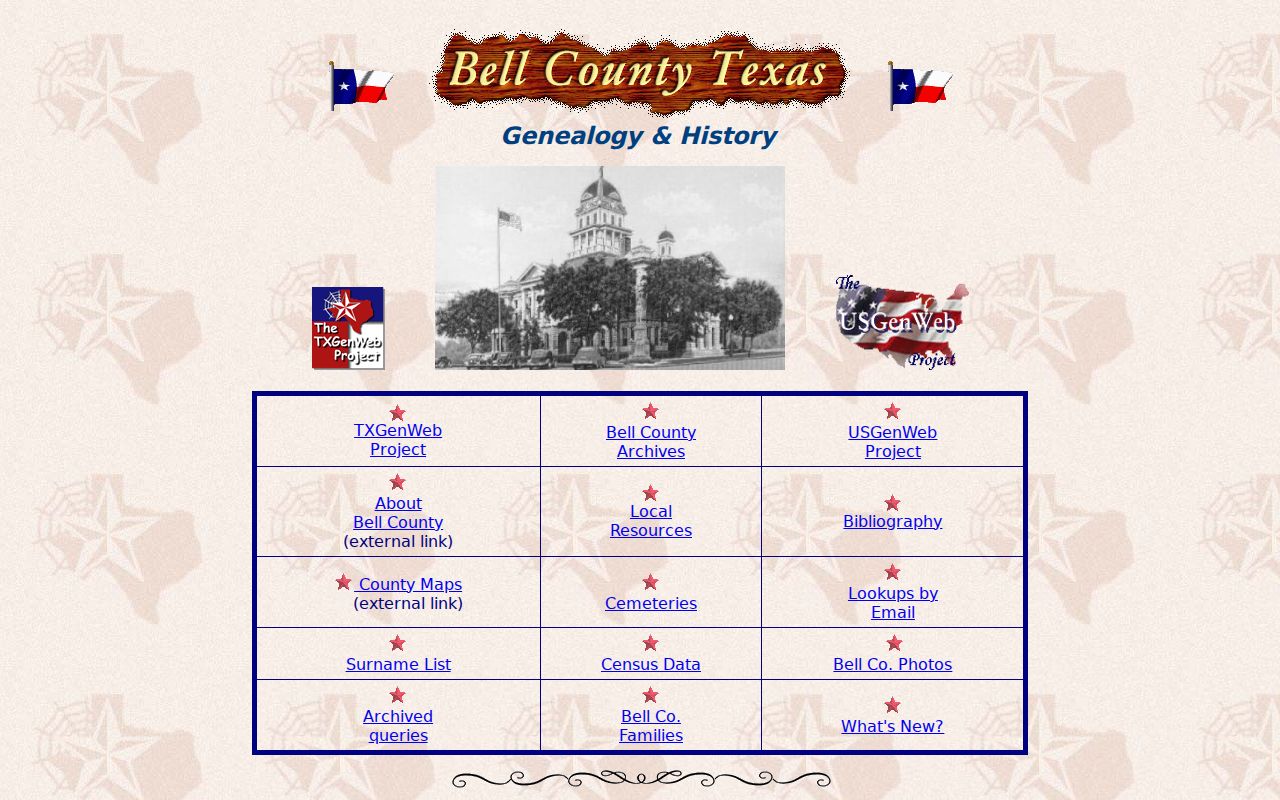
Historical collections work best as a bridge between a printed Temple directory entry and a dated original source, not as a substitute for the directory's own edition details.
The Bell County Genealogical Society and Historical Commission can also point researchers toward workshops, finding aids, ledgers, archives, photographs, oral histories, and local-family materials. Confirm current custody, hours, and copying rules before visiting. Their transcriptions and summaries remain clues until the original image or official record supports the fact.
Trace a Temple Directory Household
Tracing a household through Temple city directories is a year-by-year comparison, not a single lookup. The strongest path keeps each item tied to its date and uses a second source suited to the question. A disappearance can mean a move, a death, an omission, a changed spelling, or a volume with a different cutoff. It does not settle the reason by itself.
- Locate the earliest confirmed Temple entry and record the title page, page number, name spelling, address, and every abbreviation.
- Check the next available directory years, watching for moves, changed household wording, or an altered occupation or employer.
- Search the address or street portion only if that edition includes one, and keep an address association distinct from ownership.
- Pair directory years with the appropriate Census era, a Temple Telegram issue, deed, plat, or Sanborn sheet, labeling what each source can actually establish.
- Close a historical trail with a dated obituary, cemetery source, or official vital-record route when the law and access rules permit.
Temple's record history makes the date especially important. For 1900 through 1929, directories, Telegram material, library or municipal records, deeds, and the 1893 or 1922 Sanborn material can complement one another. For 1930 through 1969, directories, newspapers, local microfilm, cemetery work, and city or county paper trails may be useful, but collection access varies.
Note: Record an annual cutoff beside every directory fact so a later reader can see the time window it represents.
Temple City Directories and Tanglefoot
Temple's early nickname, “Tanglefoot,” appears in the Texas Historical Commission history as a muddy-street and liquor-era reference. It is a useful term for an 1880s local-history search, especially when paired with early newspaper, railroad, depot, or business words. It should not be applied to modern address research or used as a substitute for a named directory entry.
Early Temple research benefits from its rail context. The Santa Fe connection in 1881 and MKT arrival in 1882 help date why local businesses, newspapers, plats, and later directories become useful. The Commercial Historic District history also records the first Temple-Belton telephones in 1884. Search those terms with a block or institution, then retain the issue or item date with any result.
Temple Directory Addresses on Sanborn Maps
A Sanborn map can add building and block context to a Temple city directory address. The Library of Congress identifies an April 1893 Temple set with eight sheets. UT Austin metadata identifies a 1922 Temple sheet 18 georeferenced raster. These sources can show street names, block numbers, building footprints, uses, construction details, and property context. They cannot by themselves identify an occupant.
Find the correct street or block through the map index, compare its numbering with the printed directory, and then check a deed or plat if the address changed. Lot and block references can be steadier than a historical street number. The result is a stronger, transparent historical trail: directory association, map context, and a separate legal or published source when needed.