
Temple Previous Residents by Era
The right source changes with the period. Bell CAD is useful for a current parcel anchor, while the Bell County Clerk recorded index ties title transfers to an instrument and recording date. For an earlier household, a directory, newspaper item, or census-related local-history lead may be more revealing. Each source proves a different thing. A deed can document a transfer of title, but it does not prove that every owner lived at the property. A printed directory associates a name with an address for its own annual cutoff, not every day of that year.
| Temple trail | Period represented | Custodian or collection | Useful address fact |
|---|---|---|---|
| Recorded deeds and plats | Historic to current, subject to the index and instrument | Bell County Clerk | Title event, parties, legal description, recording date |
| CAD property record | Current appraisal material | Bell Central Appraisal District | Situs, owner of record, property or geographic ID |
| Temple city directories | Verified mentions include 1913, 1915-16, 1921-22, and 1924 | Library and state research routes | Printed name and address association |
| Temple Telegram and local history | Newspaper and project-specific coverage | UNT and Bell County history collections | Address, event, obituary, or community context |
| Sanborn map records | 1893 and 1922 verified Temple dates | Library of Congress and UT map collection | Block, building, lot, and street context |
The Bell County Clerk’s recorded-document search provides the most direct online route for a known property trail. Its term field can use grantor or grantee, subdivision, document type, or document number, and it offers recorded-date ranges plus index-only or index-plus-OCR searching.
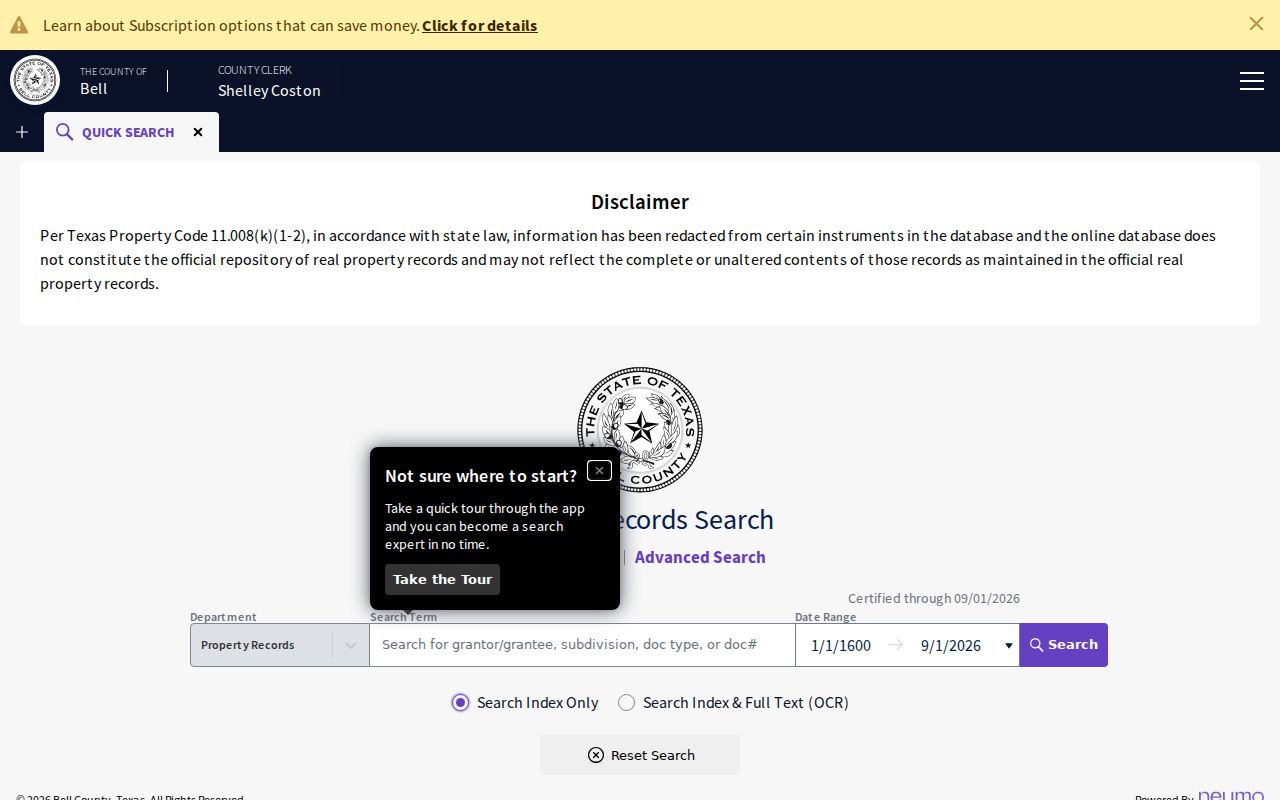
The search image is a reminder to begin with an identifiable instrument, then read its image. An index result is a lead, not the legal document itself.
Note: Record the source date and the address label before treating any entry as evidence about a past household.
Temple Past Residents and Ownership
Separate the ownership question from the household question early. A Bell CAD account can list an owner of record, a situs address, a mailing address, a legal description, and property identifiers. The mailing line can be outside Temple or Bell County. Trusts, estates, businesses, and several people may appear as owners. None of those fields alone establishes current or former occupancy.
For past residents, use CAD to anchor the parcel, then look for a dated address association in a directory, newspaper item, census project, or another appropriate historical source. The Bell County Genealogy & History collection offers cemetery, obituary, census, original-land-owner, and local-project leads. Its material can point to a source, but a transcription should be checked against an image or the responsible custodian when possible.
Bell County Genealogy & History is a useful local starting point when the county’s current-property systems are too recent for the address period in question.
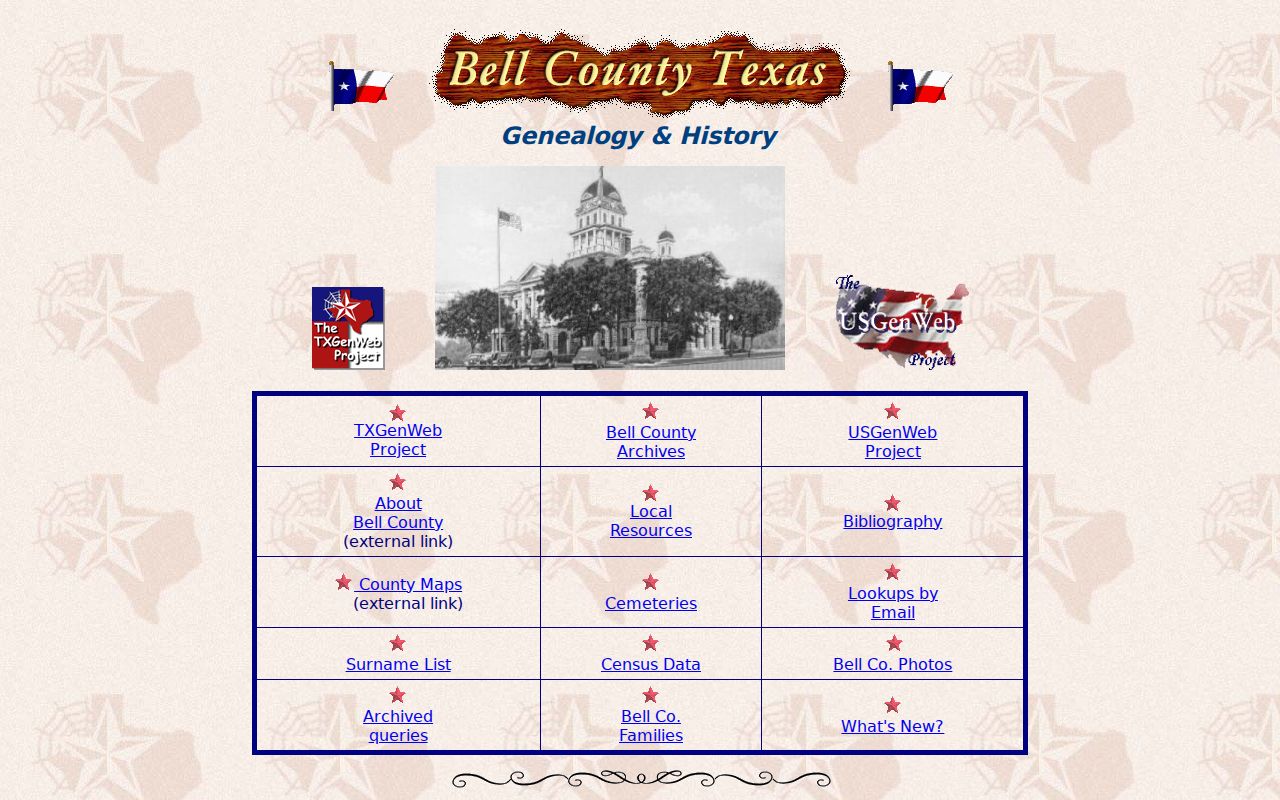
The collection’s project navigation helps narrow a historical question without turning a local-history lead into proof of residence. Preserve the collection name, item or image link, and the date consulted.
Temple Deed Chain Backward
A chain of title is a sequence of recorded transfers for the same property. It starts with the current parcel record and moves from the current deed to the deed that brought the seller into title. Bell’s recorded search supports grantor, grantee, subdivision, document type, document number, and date-range queries. Use index-only first. Move to index plus OCR when wording or a legal description needs checking, then read the recorded image for the actual instrument.
- Use Bell CAD property search to record the situs and property or geographic ID without treating the owner field as an occupancy finding.
- Locate the current deed in the Bell County recorded index. Save its instrument number, recording date, named parties, and legal description.
- Search the seller from that deed as a grantee to locate the earlier purchase. The earlier instrument identifies the preceding title event.
- Repeat the sequence backward, checking correction deeds, releases, easements, plats, probate instruments, and estate-related transfers when a gap appears.
- When the online result does not resolve the question, use the Clerk’s CountyFusion alternative, contact Recording at 254-933-5171 or deed.recording@bellcounty.texas.gov, or make a narrow request for a specific instrument.
- Grantor
- The person or entity transferring an interest in property.
- Grantee
- The person or entity receiving that interest. In a backward title search, the prior owner is often found by following this role.
- Chain of title
- The dated sequence of transfers affecting a parcel. It documents title events, not every person who lived there.
- Legal description
- A lot, block, abstract, or metes-and-bounds description used in the record. It can remain more stable than an old street number.
Bell lists copy instruments at $1 per page on its recorded-search information. Confirm certified-copy terms and any current ordering charges before relying on a total. Note: Ask for a named instrument and date range, not a broad file about a person.
Temple Address Numbers Change
Old Temple addresses can be difficult because city numbers change after platting, subdivision work, roadway projects, annexation, address corrections, or a rural route becoming a named street. A historical reference may use a lot and block, cross street, business name, or old road name rather than a number that matches today’s delivery address. Search spelling variants, directional abbreviations, and street suffixes before deciding that a result is absent.
Lot and block information gives a better comparison point. Match the legal description in a deed or plat to the block in a directory or map. If a permit, directory, and deed use different numbers, keep all labels with their dates and name the source that used each one. Bell CAD’s situs, the GIS label, a USPS line, and a recorded legal description have separate custodians and can legitimately differ.
This is the main difference between a house-history inquiry and a modern address match. The historical trail should preserve the disagreement rather than replace it with an assumed correction.
Temple Previous Residents on Maps
Maps supply built context for a previous-residents search. The Library of Congress identifies an eight-sheet Temple Sanborn Fire Insurance Map dated April 1893. UT Austin identifies a georeferenced Temple 1922 sheet 18 record. These maps can show street and block numbers, building footprints, construction, property boundaries, and commercial or industrial uses. They cannot identify the people who lived in a building by themselves.
The UT map collection’s Temple 1922 sheet 18 metadata offers a dated way to compare a historic block with the legal-description trail.
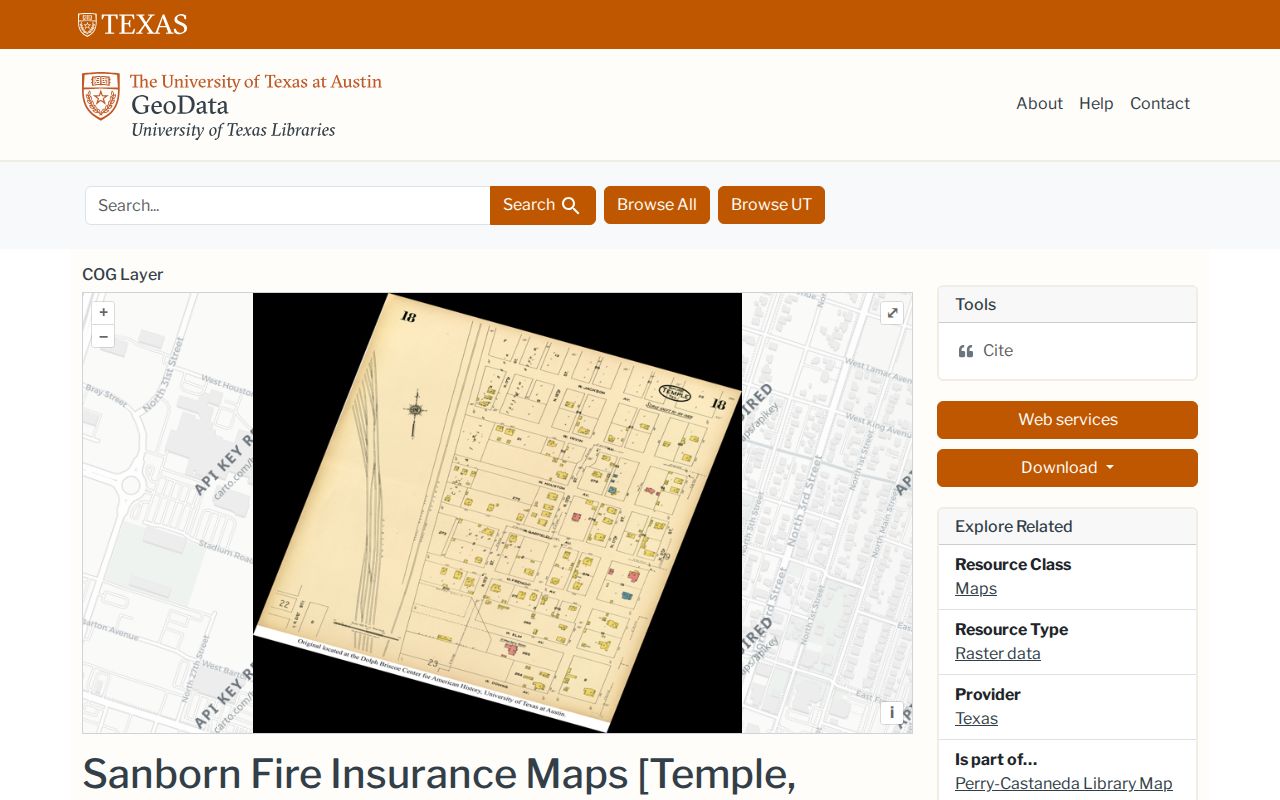
Use a map sheet to test a lot, block, or building change, then pair it with a deed, directory, or newspaper item for a person-specific question. The 1893 and 1922 records are two distinct dated snapshots, not a continuous occupancy file.
Temple Previous Residents in Directories
City directories are the household layer that deeds do not supply. The Texas State Library and Archives Commission explains that directories commonly include a name, address, telephone, spouse, occupation, and an owned-or-rented indicator. Temple has verified bibliographic mentions for 1913, 1915-16, 1921-22, and 1924. Other years surfaced as holding leads, but the research did not verify an uninterrupted local run or a Temple reverse-directory run. Treat every volume as a separate edition, and confirm its title page, city, publisher, and scope.
A directory entry is an annual printed address association. It may show the occupant, while the deed trail shows a title transfer. That distinction matters when trying to identify previous residents rather than simply past owners. The historical volumes and their access routes are described in the Temple city directory collections.
- Choose the closest verified directory year for the address period and record its title-page details.
- Search the name alphabetically, then search the address or street portion if that edition has one.
- Compare adjacent available editions because a listing reflects an annual cutoff and a household can move between print dates.
- Pair a directory finding with a census-related local-history lead, newspaper item, deed, plat, or map, and label what each source actually supports.
Temple Public Library can help with a catalog or finding-aid search, while the Texas State Library guide points researchers to on-site reference holdings, UNT, UT Austin, WorldCat, and library-to-library routes. The library’s historical locations changed, so search 101 N. Main, 100 W. Adams, the old post office, and municipal-building references with a date attached.
Note: Treat the directory’s title page and annual cutoff as part of the evidence, especially when neighboring editions conflict.
Temple Past Residents in Print
The Temple Telegram collection at UNT is a second source for an address, event, obituary, business, or civic reference. It describes a newspaper collection founded in 1907 after earlier Temple papers and supports searches by exact name plus date, as well as street or business name. Save the issue date, page, title, and item identifier. A newspaper report can repeat an error or refer to people with the same name, so it should corroborate rather than replace an address record.
The Texas Historical Commission’s Temple Public Library marker documents the library’s 1900 formation, the 1904 Carnegie building, its 1918 fire, and later moves. Those date-specific locations can improve a catalog or clipping search when a library address is part of the historical question.
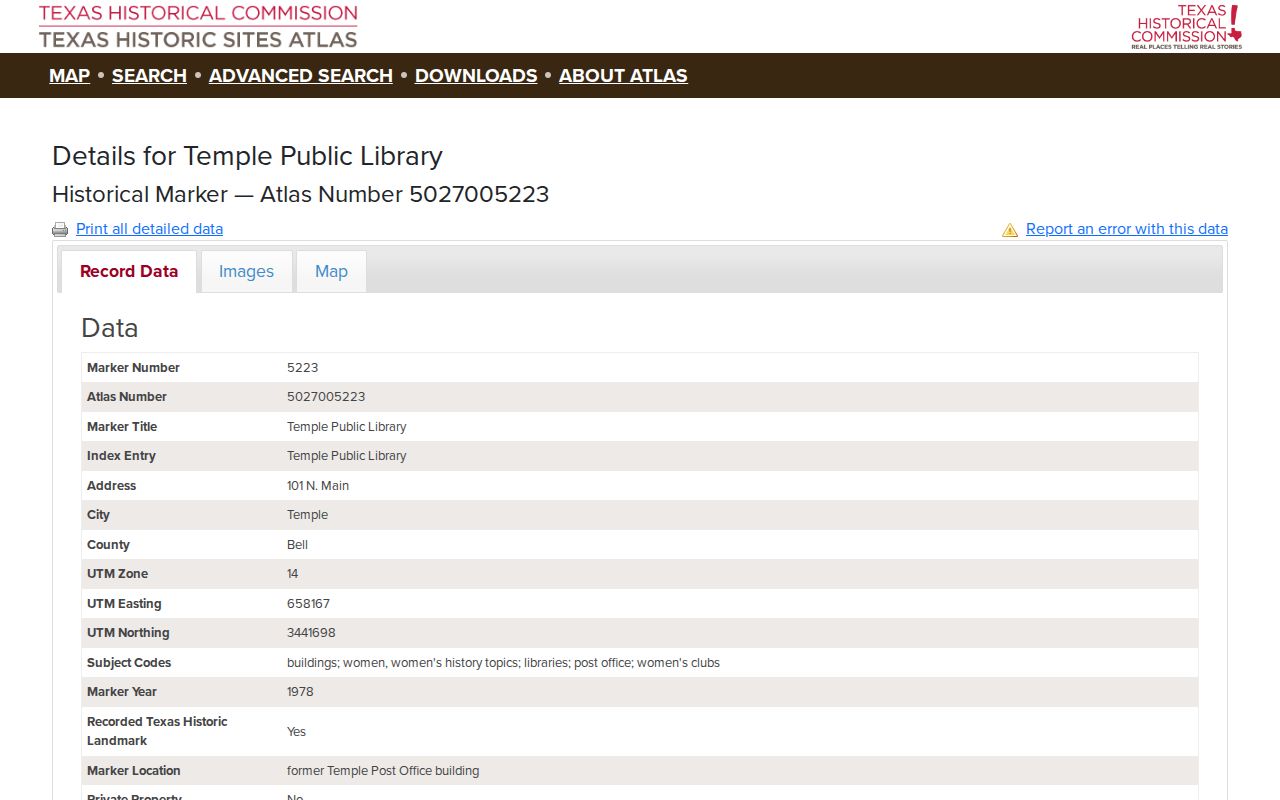
The marker provides institutional history, not a resident listing. Its value is as a dated search term for library records, local photographs, and directory references.
Note: Keep a newspaper issue, map sheet, or directory page separate from the later conclusion it helps support.
Temple Previous Residents, Lawful Research
Historical sources deserve the same privacy care as current records. Do not publish full dates of birth, personal phone or email, unredacted signatures, protected home addresses, juvenile or victim material, or a copied roster. A name missing from a directory does not prove that someone was absent from Temple. An owner record also does not prove occupancy. State the record class, date, custodian, and limited fact instead of combining scattered records into a profile.
Lawful use. Temple previous-resident research fits house history, family history, estate questions, and personal curiosity. Do not use a public record to track, harass, intimidate, or expose a living person.
Texas address-confidentiality and voter-suppression rules protect some residential information. If a source signals a protected address, do not try to reconstruct it from another record. For a nonprotected factual error on a public agency page, contact the custodian for correction or annotation rather than altering the historical trail by guesswork.